May 31, 2012

My Romanian vacation Part 1 – Talking about Easter

After a long and enjoyable trip, an exhausting 24 hour travel back, a dreary and tasteless low fat airplane meal, a copious and overindulged airport Mexican snack, a painfully hot Memorial Day weekend, and a week-long jet lag recovery, I’m finally rested and ready to share with you my Romanian spring vacation.  You may be a bit confused since I’ve posted a couple of stories while I was still in Romania; I thought that I couldn’t leave you guys for eight weeks without anything to cook, bake or simply assemble.  Now, I’m back and, guess what, we’re talking about Easter again.  I know, I know, Easter has long passed, the eggs have been cracked, the ham has been eaten, but I just can’t overlook our most important holiday or share with you some of the exquisite traditional dishes on our Easter table back home in Transylvania. 


I have to admit that this year was my first time in eight years that I went home for Easter; so, it was pretty special and emotional.  I was afraid that I had forgotten the Romanian way of celebrating Easter.  But there was nothing to be afraid of.  Once home, it all came back to me.  In fact, all these traditions and feelings were still there, still strongly imbedded in my memory, behavior and faith.  Perhaps, they had only been dormant for several years.  I instantly recalled how relaxing and uplifting it had always been around Easter to vegetate on my grandmother’s terrace admiring the greenery and soaking up the crisp spring atmosphere.  This year was no exception.  On Easter day, the smell of lamb nicely roasting in the oven invaded the surroundings, the eggs were already painted and were patiently waiting to be knocked, the Pască was resting, so was the lamb haggis, while the never tiring beak of a nearby wood-pecker kept digging for food in the bark of an old walnut tree.  It seemed that even the wood-pecker knew it was time for a good feast.  In fact, it was time for a long awaited and beautiful holiday at home.   

As expected, the food at Easter is an essential element.  We didn’t put together a pretentious menu, but it was abundant, just as I remembered it, filled with all the dainties we all love for Easter.  The table was colorful, plenteous and ready for us to attack. 

There were red tinted eggs


Lamb Haggis


Lamb Ciorbă


Roasted lamb with green peas and creamy mashed potatoes


Fresh Bibb lettuce salad


Countless cakes and cookies


The most important part of Easter was to be there and prepare these dishes with my mom and grandma after all these years.  It’s endlessly fascinating to watch my grandma cook; roaming around the kitchen with her glasses halfway down her nose, being so quiet and absorbed that you don’t dare to move an inch so that you don’t disturb her and make her lose her focus.  And when you do move and make some noise, she looks up, her engrossed expression disappears for a second from her face and she sketches a smile only to regain her concentration in an instant.  This year, Grandma Vicki added a new cake to the Easter menu.  It was a glamorous, elegant and vibrant Vanilla and Raspberry Cake.  This cake was so buttery and light at the same time, while the bright raspberries gave it a pop of color and tanginess.  It was such a fantastic cake that we made it again for my grandma’s birthday a couple of weeks later.


Vanilla and Raspberry Cake
By Simply Romanesco inspired by my Grandma Vicki

Serves: About 20 servings

Ingredients for the Cake:

·         8 eggs
·         420 grams (1 ¾ cups) sugar
·         1 teaspoon vanilla extract
·         210 grams (1 ¼ cups) flour     
·         1 teaspoon baking powder
·         A pinch of salt
·         Butter and flour to coat the pan

Ingredients for the Almond syrup:

·         ¼ water
·         2 Tablespoons sugar
·         ½ teaspoon almond extract

Ingredients for the Vanilla Frosting:

·         5 egg yolks 
·         250 grams sugar
·         1 teaspoon vanilla extract
·         500 grams mascarpone cream
·         100 grams raspberries fresh or frozen (if using frozen raspberries, thaw them and drain them)
·         Chocolate for decoration

Instructions for the Cake:

Preheat the oven to 375°F.  Coat a 14 by 10-inch pan with butter and flour. 

In a medium bowl, combine the flour and baking powder.  In a large bowl, beat the egg yolks, sugar and vanilla extract with a hand mixer until light and fluffy.  Add the dry ingredients and beat until incorporated.  In a medium bowl, beat the egg whites with the salt on medium speed until they hold medium-firm peaks.  Carefully, fold the egg whites into the egg yolks, sugar, flour, and vanilla mixture. 


Pour the batter into the prepared pan and bake for 30-35 minutes or until golden brown and a tester comes out clean.  Cool 10 minutes in the pan on a rack, then turn out onto the rack to cool completely.  When the cake has cooled completely, slice it in half using a large knife. 

Instructions for the Almond syrup:

In a small saucepan, bring the water, sugar and almond extract to a boil and stir until the sugar dissolves.  Turn off the heat and let cool completely.  Once it has cooled, carefully spoon the syrup over both sides of the cake.  Let the cake absorb the syrup for several minutes.  In the meantime, prepare the cream.

Instructions for the Vanilla Mascarpone Frosting: 

In a large bowl, beat the egg yolks, sugar and vanilla extract with a hand mixer until light and fluffy.  Gradually add the mascarpone cream.  Don’t worry if the mixture will be too runny at first; it will thicken up as you beat it. 

Spread half of the frosting over the bottom half of the cake.  Add the raspberries.  Place the other half of the cake on top, top side up.  Spread the remaining vanilla mascarpone frosting over the top and sides of the cake.  Sprinkle chocolate curls or pieces on top for decoration. 


It smelled, looked and felt like Easter and it felt good to be home!

Poftă Bună! (Bon Appétit!)    

May 15, 2012

Going bananas

When I think of bananas, I usually think of an exotic fruit that gives you energy and that it’s best eaten in the morning or thrown into a sort of cake.  Well, it turns out there are countless things you can do with bananas.  One of these is a Cranberry-Topped Pudding.  Now, I’m not really sure that this is actually a pudding, but we’ll let that slide by; it’s not that important anyway.  What’s important is that you can have this pudding for breakfast, brunch, dessert, snack, you name it.  And even more important is the fact that it’s featherlight, filling and fabulous! 

I came across this recipe a few weeks ago.  It was nicely delivered with our Thursday Pittsburgh Post-Gazette paper.  And out of the 10 easy things to do with bananas, this one stood out the most.  It was easy, fast and looked (at least in the picture) gorgeous.  I planned on trying this recipe for brunch over the weekend one of these days, but it turned out that brunch came sooner than expected.  Not long ago, both Adrian and I were in the mood for something sweet.  I’m not the only one in our family who has a sweet tooth; my husband is a major sweet lover.  Unfortunately, I was out of anything dessert like.  So, I had to improvise.  And this is how our pre-planned brunch turned into a late night dessert.  And it was well worth it!    


This pudding is a great way to start your morning or as it turned out for us to end your night.  The Greek yogurt and ricotta cheese make this pudding hearty, while the cranberries make it chewy and tart.  And you’ll also get an energy boost from the bananas.  Sprinkle some toasted sliced almonds on top for an extra layer of texture, crunchy bite and nutty flavor.  You will not be sorry.   

Cranberry-Topped Pudding
Adapted from Dash (March 2012)

Serves: 4 servings

Ingredients:

·         2 teaspoons fresh lemon juice
·         3 sliced bananas
·         1 cup plain Greek yogurt
·         ¼ cup ricotta cheese
·         2 Tablespoons honey
·         2 Tablespoons dried cranberries

Instructions:

Sprinkle lemon juice over the bananas.  In a large bowl, combine the Greek yogurt, ricotta cheese and honey.  Add bananas.  Spoon into 4 serving bowls.  Top each serving with dried cranberries. 

Poftă Bună! (Bon Appétit!)    

May 7, 2012

Something to nibble on

I have a sweet tooth.  So, I would say that any good meal has to end with a good dessert.  Having said that, chocolate chip cookies have never really been my thing and, for me at least, would be a stretch to call them dessert; I would rather call them a sweet snack.  I think that they remind me too much of the sadly pale cookies always present on the dessert table in the college cafeteria.  I have to say that they were beautifully displayed on cookie trays in an attempt to make them look appealing.  I’d peek; even try to make myself interested, but then walk away always ending by the ice-cream counter.  Truth be told, I did try them a couple of times.  I was just too curious; I can’t help it, it’s my nature.  Unfortunately, although they would look lush and glamorous and inviting in the stack on the cookie tray, once out of the pack, they would lose their charm and good looks.  Those cookies were just bland and sort of rubbery, and not even the chocolate bits inside would do them justice.   


Fortunately, I can’t say the same about these chocolate chip cookies that I found in the March issue of Bon Appétit.  These might have just converted me to a chocolate chip cookie lover for good.  They are so addictive!  These cookies are buttery, crunchy and sweet with golden tops and nicely toasted brownish edges.  Those utterly decadent soft centers just melt away in your mouth, while the subtle salty aftertaste lingers on your taste buds for a few moments only to balance out the sweetness and richness.  These are the perfect sugary goodness to nibble on or to enjoy with a glass of milk.  Oh, and they’re super easy peasy to make!   


Chocolate Chip Cookies
Adapted slightly from Bon Appétit (March 2012)

Makes 30 cookies

Ingredients:

·         1 cup plus 2 Tablespoons all-purpose flour
·         ¾ teaspoon kosher salt
·         ½ teaspoon baking powder
·         ¾ cup (1 ½ sticks) unsalted butter, at room temperature
·         ¾ cup (packed) light brown sugar
·         ¼ cup granulated sugar
·         1 large egg, at room temperature
·         ½ teaspoon vanilla extract
·         1 cup semisweet chocolate chips

Instructions:

Preheat oven to 425°F.  Line baking sheet with parchment paper. 

Whisk flour, salt and baking powder in a small bowl.  Using an electric mixer on medium-high speed, beat butter and both sugars in a large bowl until well combined, about 2-3 minutes.  add egg and vanilla extract; beat on medium-high speed until mixture is light and fluffy, about 2-3 minutes.  Add dry ingredients, reduce speed to low, and mix just to blend.  Fold in chocolate chips.


Using a mini ice cream scoop, spoon dough onto prepared baking sheet, spacing 1 ½” apart.  Bake, rotating pan halfway through, until edges are golden brown, about 8 minutes.  Transfer to wire racks and let cool.  Repeat with the remaining dough. 

Do ahead:  Can be made 1 day ahead.  Store airtight at room temperature, or freeze cookies for up to 2 months.   


Poftă Bună! (Bon Appétit!)    

April 27, 2012

French or Hungarian?

We’re talking about French food again.  After Julia Child’s Chicken with Cream, Mushrooms and Port, I came upon another French recipe.  The truth is that I had completely forgotten about this Chicken with Paprika (Poulet au Paprika) recipe, which ended up buried in my recipe collection, which I created over time.  I kept postponing trying this dish until it left my mind entirely.  Luckily, I rediscovered it not so long ago.  It was one of those nights when I just couldn’t decide what to make for dinner.  I knew I wanted something simple, but elegant (not to mention that I only had a few basic ingredients in my fridge and pantry that I kind of wanted to get rid of), but I couldn’t make up my mind.  I was frantically rushing through my ever-expanding recipe collection when I dug it up again.   


I was in Toronto when I first saw Laura Calder make this Chicken with Paprika (Poulet au Paprika) dish on Food Network Canada (the Canadian sister of Food Network).  And I was intrigued.  I’ll tell you why – because Hungarian paprika is one of the main ingredients of this dish.  I wondered if this was really a French recipe (Laura Calder’s show is called French Food at Home).  And then I saw the cream and wine…  I know that paprika is widely used in French cuisine, but it’s even more prevalent in Hungarian cooking.  So, I would say that this recipe is indeed French, but with a Hungarian twist.  


In the end, it doesn’t really matter if the recipe is French or Hungarian.  What matters are the amazing flavors that will pop and dance in your mouth, and how fast you’ll go for seconds.  The paprika gives the vegetables a nice deep red tint, and half way through the recipe they are drowned in a crisp and light white wine, which elevates the flavors to a whole different level.  The sauce has depth and is just divine.  The cream makes it velvety and rich; the red pepper makes it sweet; the celery gives it a crunch, while the plump tomatoes make it tangy and copious.  Not to mention the full-bodied aroma the chicken absorbs while bathing in this decadent sauce and still remaining moist and juicy.  It’s unbelievable how simple ingredients can create a dish that is so gourmet and flavorsome.

Chicken with Paprika (Poulet au Paprika)
Adapted from Poulet au Paprika by Laura Calder

Serves: 4 servings

Ingredients:

·         4 chicken drumsticks and 4 chicken thighs
·         Salt and black pepper
·         3 Tablespoons vegetable oil
·         1 red pepper, seeded and cut into roughly 2-inch / 5 cm julienne
·         1 medium yellow onion, sliced
·         2 celery stalks, sliced
·         1 Tablespoon sweet Hungarian paprika
·         1 clove garlic, minced
·         ½ cup / 125 ml white wine, such as Chardonnay or Pinot Grigio
·         1 (15-ounce) can diced tomatoes with juices
·         1 teaspoon sugar
·         1 bay leaf
·         2 Tablespoons heavy cream

Instructions:

Season the chicken with salt and pepper.  Heat the oil over medium heat in a sauté pan and brown the chicken pieces on all sides.  Remove chicken to a platter.

Reduce the heat to medium-low and add the onion, red pepper and celery.  Season with a pinch of salt and pepper.  Add the paprika.  Cook until soft, about 10-12 minutes, adding the garlic for the final minute.  Deglaze the pan with the wine.  Add the tomatoes, sugar and bay leaf.  Season with more salt and pepper to taste.  Put the chicken back in.  Cover the pan, and cook over medium-low heat, turning the chicken occasionally, until tender, about 40 minutes. 

Remove the chicken to a serving platter and cover with foil to keep warm.  Turn up the heat under the sauce and boil down to sauce consistency, about 2 minutes.  Turn off the heat, stir through the cream, check the seasonings (including the paprika, adding more if you like), then pour over the chicken, and serve.  


Poftă Bună! (Bon Appétit!)    

April 5, 2012

Happy Easter!

I’ve told you before how Romanians love to enjoy a big feast and how we prepare special dishes on important religious holidays.  If at Christmas the main ingredient on our table is pork, at Easter the main ingredient is lamb.  If at Christmas we sacrifice the pig, at Easter we sacrifice the lamb, and we use all parts of the animal to create a festive meal for Easter Sunday including a lamb soup, lamb haggis and a braised lamb main course.  Besides the lamb dishes, always present on the Easter table are the Easter eggs, hard-boiled, and either elaborately hand painted with various floral or national motives, or just tinted plain deep red.  Before eating the eggs everyone around the table knocks an egg with that of the next person, and the winner is the one whose egg doesn’t break after all the others are cracked.  


Now that you get an idea of the savory dishes at Easter, let me tell you about the sweet ending of our Easter meal.  The traditional dessert at Easter is called Pască, which is mainly the Romanian Panetone with Cheese.  It’s a must on every Romanian Easter table and this year I made it too.  I have to say that I was a little apprehensive of the way it would turn out especially because I had to make a substitution.  I didn’t have any farmers cheese on hand, so I used ricotta cheese instead.  I had seen my Grandma make this cake before but that it was a long time ago.  Since Pască is made only at Easter, I haven’t seen Grandma Vicki make it in years, so I had to refresh my memory with the steps I had to take and the way it was supposed to turn out. 

To be honest, I was pretty much trying a brand new recipe.  My recollection of my Grandma’s creation was nebulous to say the least, only bits and pieces, and all I had was her recipe and her encouragement that it will come out great.  Easy to say when you’ve done it a hundred times, Grandma!  But I was equipped with a winning recipe, strong will, and confidence, and I was determined to succeed and make my very own Pască.  And I was poised… until I saw the really runny custard.  For a split second that terrifying lousy, mediocre baker feeling came back to haunt me.  How would that liquid custard ever cook through?  Truth be told, I had no idea.  I just threw it in the oven and hoped for the best. 


The best, in fact, the extraordinary came out of the oven over an hour later.  The top was glossy and golden brown, and the filling was fully cooked through.  The outside fragile dough that surrounds the cheesy custard like a fortress, turned into a sweet, crunchy and flaky crust.  The inside was moist, velvety with a subtle gritty consistency from the ricotta cheese, and the vanilla infused raisins added a delicate chewiness and a lovely perfume.  This is not one of those fancy, complicated and richly decorated Pască that Romanians are known to create for Easter.  It’s an easier cake to make but one that still incorporates fantastic flavors, which simply shine through.
 
Pască (Romanian Panetone with Cheese)
By Simply Romanesco inspired by my Grandma Vicki

Serves: 10 servings
Special Equipment: 9-inch round springform pan

Ingredients for the crust:

·         100 grams unsalted butter, at room temperature, plus more to coat the pan
·         100 grams granulated sugar
·         1 egg, at room temperature
·         1 heaped Tablespoon sour cream
·         300 grams all-purpose flour
·         ½ teaspoon baking powder
·         1/8 teaspoon salt

Ingredients for the custard:

·         500 grams ricotta cheese, at room temperature
·         3 eggs plus 1 egg yolk, at room temperature
·         200 grams granulated sugar
·         2 teaspoons vanilla extract
·         100 grams raisins
·         Lemon zest from 1 lemon

Instructions for the crust:

Preheat the oven to 375°F.  Coat the bottom and sides of the springform pan with butter. 

In a medium bowl, combine the flour, baking powder and salt.  


In a large bowl, beat the butter with the sugar using an electric hand mixer, for 2-3 minutes.  Add the egg and beat on medium speed for 1 minute.  Beat in the sour cream.  In batches, beat in the flour, baking powder and salt mixture until well combined.  Set aside.

Meanwhile, in a large bowl combine the ricotta cheese, eggs and egg yolk (mixing well after each egg addition), sugar, vanilla extract and lemon zest.  At the end, fold in the raisins.  Set aside. 

Roll out the dough into a ¼-inch-thick round.  Place the dough in the springform pan making sure that it also covers the sides of the pan.  Pour the custard over the dough. Bake the Pască for 80-90 minutes or until the custard is cooked through and golden brown and a toothpick comes out clean (check the cake after 60 minutes).  Transfer to a wire rack and let cool slightly for 10 minutes.  Remove cake from the springform and let it cool completely.       


We’ll be going home for Easter, tomorrow.  I can’t wait.  I can’t wait to be in the kitchen with my Grandma, cook with her, and savor all those mesmerizing Easter aromas.  I can’t wait to watch my Grandma make Pască again.  I can’t wait to take part in all those beautiful Easter traditions.  I’ve missed all of this and now it’s time to experience it again.  But, I’ll be back soon and I’ll tell you all about it.

Until then, Poftă Bună! (Bon Appétit!) and Happy Easter!    

March 28, 2012

More oranges…

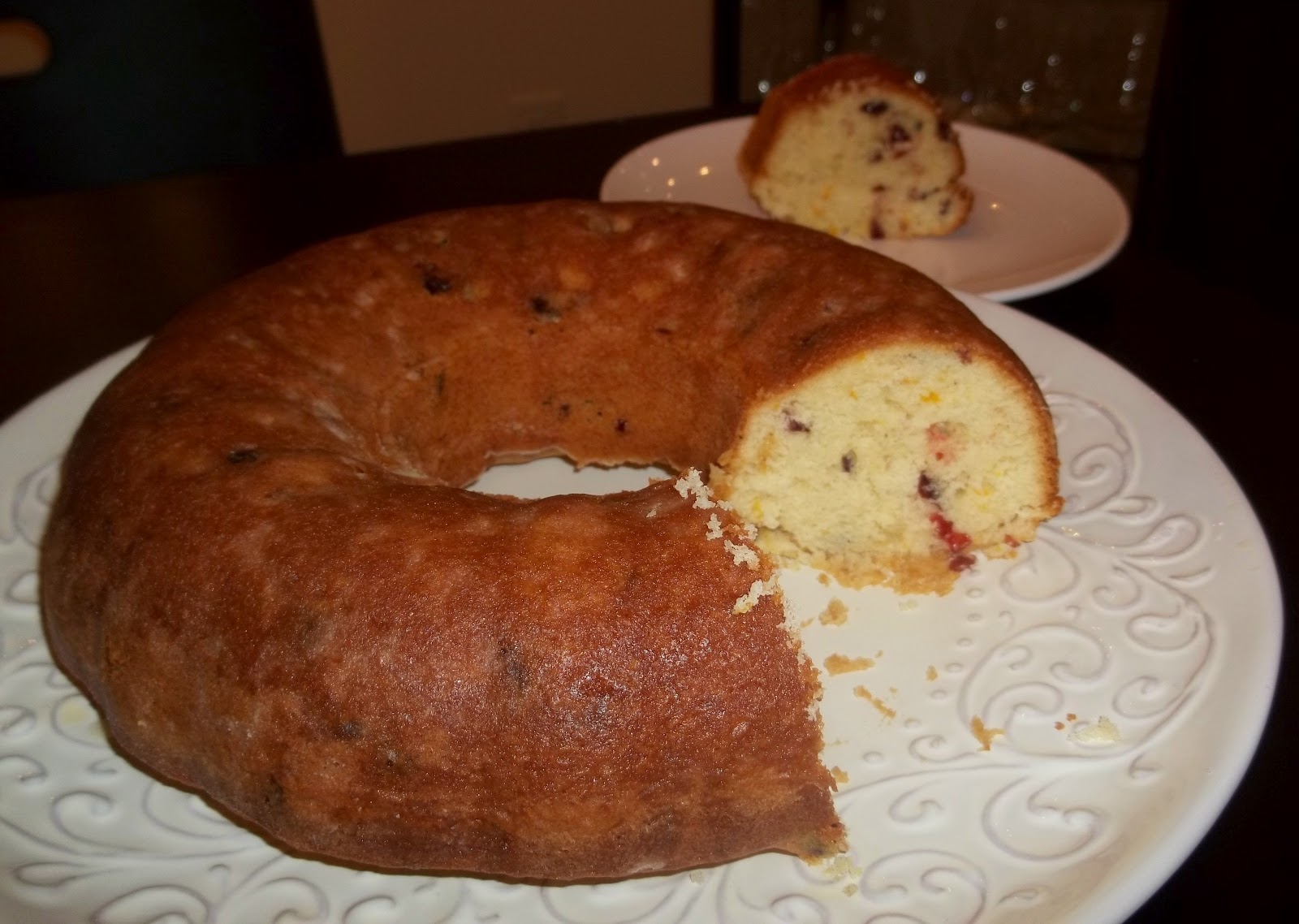
It seems that I can’t get enough of these orange cakes.  I know that it was just last week that I shared with you an Orange Cake recipe, but I can’t move on from this chapter without sharing with you yet another delectable orange cake, this time accompanied by good gummy cranberries. 

I made the Orange-Cranberry Cake for the first time a few Saturdays ago and planned on taking it to a dinner party.  To my surprise and sheer dismay it didn’t come out as I expected.  In fact, it was a total disaster!  It wasn’t that the cake wasn’t good; don’t get me wrong.  On the contrary, it was light, airy and fluffy, and just melted in your mouth.   The cake was citrusy and utterly decadent, while those bits of dried cranberries floating in a sea of orange dough were colorful and visually stunning.  It was great if you overlooked the fact that you had to eat half of the cake from the platter and the other half from the bundt cake pan.  Yes, it wasn’t at all presentable.  It got stuck to the pan and completely fell apart.  I couldn’t believe it.  I was so disappointed and felt like a lousy, mediocre baker.  


It wasn’t that this recipe was dauntingly complex and hard to make.  It was as simple as 1, 2, 3, but I made a basic mistake.  And I even thought about it as I was generously coating my pan with nonstick vegetable spray.  I was thinking that I should probably just generously butter and flour the pan.  But, no, I went ahead with the cooking spray.  What I should have done was to listen to that tiny voice in my head whispering to use plain old butter and flour.  So, after the cake calamity, I didn’t have time to make another cake before our dinner, and we ended up taking wine.  Not at all the result I had envisioned and definitely far from my true potential. 

Last week, I decided that it was time to try my luck again with the orange-cranberry cake.  It was just too damn scrumptious to give up on it.  This time, however, no baking spray in sight just butter and flour to coat the pan.  And, guess what – it worked out beautifully!  It was a delight watching the cake pulling away from the pan while it was cooling ever so slightly.  I just knew it would come out of the pan easily and look like a million bucks.  And it did.  Sometimes, second time’s the charm!


Orange-Cranberry Cake
Adapted from Better Homes and Gardens Best Desserts (Spring 2012)

Serves: 12+ servings

Ingredients:

·         ¾ cup butter, at room temperature; plus more to coat the bundt pan
·         1 ½ cups all-purpose flour, plus more to coat the pan
·         3 eggs, at room temperature
·         1 teaspoon baking powder
·         ¼ teaspoon ground nutmeg
·         ¾ cup granulated sugar
·         ¼ cup orange juice
·         Finely shredded peel from 1 orange
·         ½ teaspoon vanilla extract
·         ½ cup dried cranberries, finely snipped
·         1/3 cup granulated sugar
·         ¼ cup water
·         2 Tablespoons packed light brown sugar
·         2 Tablespoons agave nectar
·         ½ cup orange juice

Instructions:

Preheat oven to 325°F.  Generously butter and flour a 10-inch bundt pan.  Set aside. 

In a small bowl, stir together flour, baking powder, and nutmeg.  Set aside.

In a large bowl, beat butter with an electric hand mixer on medium to high speed for 30 seconds.  Gradually add the ¾ cup granulated sugar, beating on medium speed about 5 minutes or until light and fluffy.

Stir in orange juice, orange peel, and vanilla extract.  Add eggs, one at a time, beating on low to medium speed for 1 minute after each addition and scraping side of bowl frequently.  Gradually add flour mixture, beating on low speed just until combined.  Stir in dried cranberries. 

Pour batter into the prepared pan, spreading evenly.  Bake for 40-45 minutes or until a toothpick inserted near the center of the cake comes out clean.  Cool in pan on a wire rack for 10 minutes.  Remove from pan and cool completely.  Generously pick top and side of cake with a fork.  


For the syrup:

In a medium saucepan combine the 1/3 cup granulated sugar, the water, brown sugar, and agave nectar.  Cook and stir over medium heat until bubbly and most of the sugar is dissolved.  Remove from heat.  Stir in orange juice; cool slightly.  Spoon or brush syrup over top and side of cake. 

Poftă Bună! (Bon Appétit!)